The best time to travel to Paris depends on your priorities. Spring (April–May) offers mild weather and blooming gardens with manageable crowds. Autumn (September–October) delivers comfortable temperatures, fewer tourists, and vibrant cultural events. Summer is peak season with long days but heavy crowds. Winter suits budget travelers seeking a quieter, festive experience.
Paris doesn’t need an introduction—but it does demand a plan. Few cities reward thoughtful timing the way Paris does. Visit at the wrong moment, and you’re battling hour-long queues at the Louvre in 35°C heat. Time it right, and you’re strolling through the Luxembourg Gardens at golden hour with a croissant in hand and almost no one in your way.
The French capital draws over 40 million visitors annually, making it one of the most visited cities on Earth. That kind of popularity means your travel window genuinely matters—not just for the experience, but for your budget, comfort, and overall enjoyment. Flights, hotel rates, crowd levels, and available experiences all shift dramatically depending on the month you choose.
This guide breaks down every season to help you identify the best time to travel to Paris for your specific needs. You’ll find honest pros and cons, key events to know about, and practical tips to make the most of your trip—regardless of when you go.
Spring in Paris (March, April, May): Blooms, Balance, and Brilliance
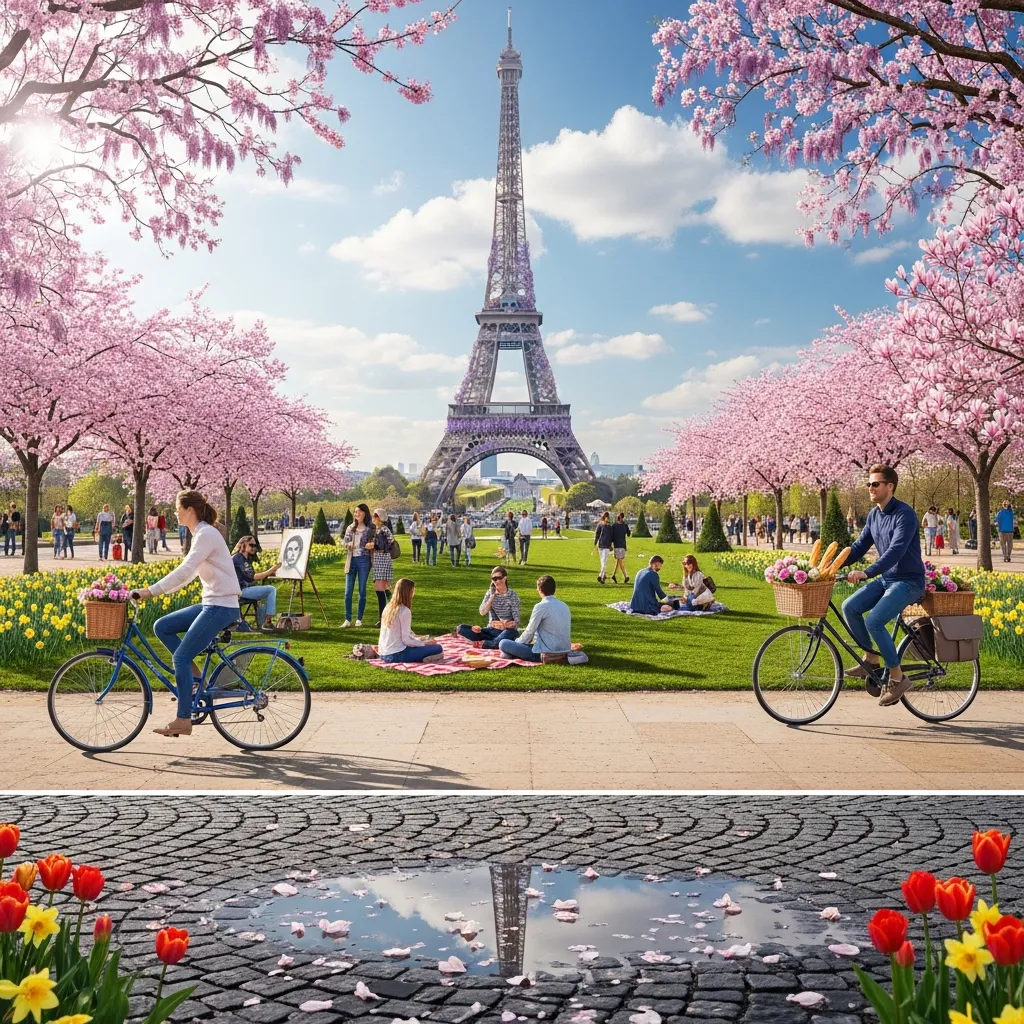
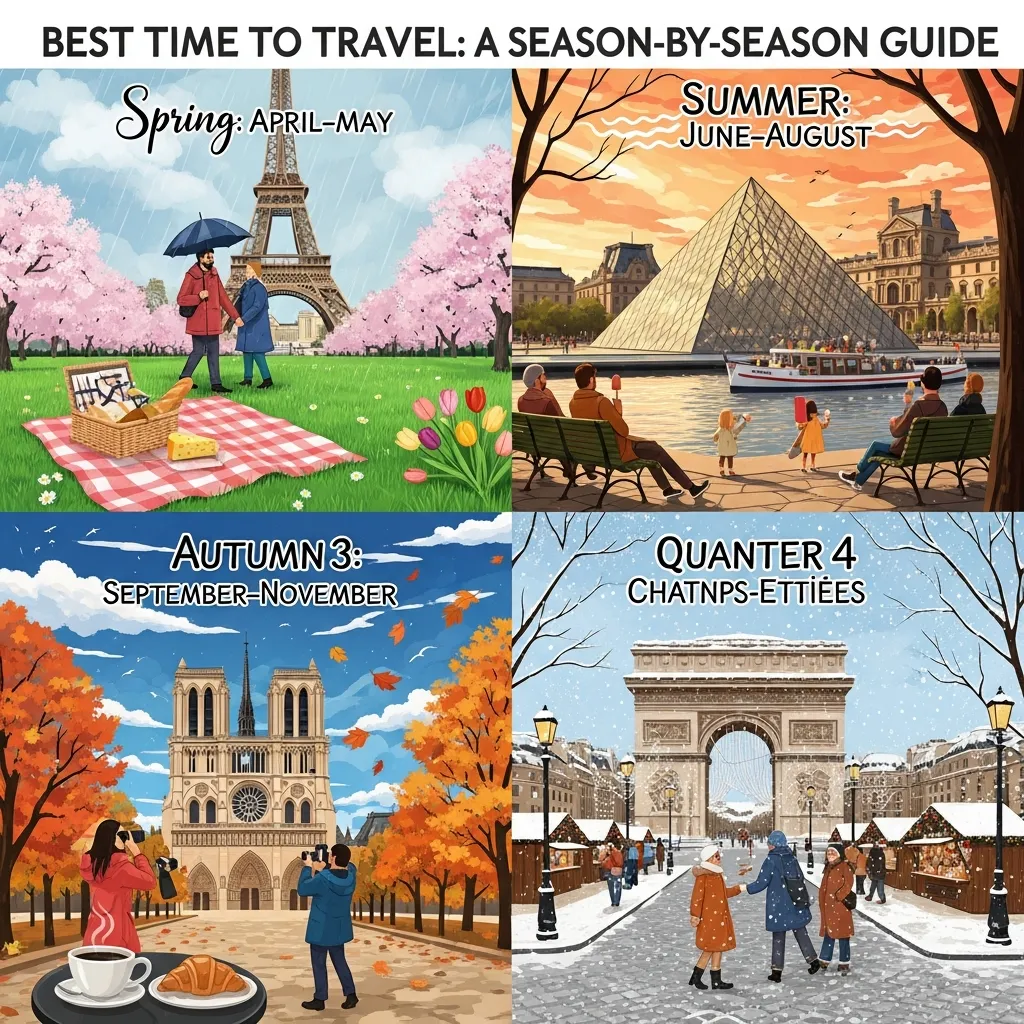
Spring is widely considered the best time to travel to Paris, and for good reason. Temperatures climb from around 8°C in March to a comfortable 20°C by May. The city’s famous chestnut trees burst into blossom, the Seine sparkles under clear skies, and the terraces of Parisian cafés fill up again after a long winter.
What’s the Weather Like in Paris During Spring?
Expect mild, pleasant conditions—though March can still carry a winter bite. Pack a light jacket and be prepared for the occasional shower. April and May are generally drier and warmer, making outdoor sightseeing genuinely enjoyable.
What Events Happen in Paris in Spring?
- Easter weekend brings festive celebrations and extended opening hours at many museums.
- The French Open (Roland Garros) takes place in late May and early June, drawing tennis fans from around the world.
- Art Paris (typically held in April) showcases contemporary works from hundreds of galleries.
Spring Pros and Cons
Pros: Beautiful scenery, comfortable weather, manageable crowds, and an energetic city atmosphere.
Cons: Prices begin rising in April. Accommodation books up quickly around Easter and the French Open—reserve well in advance.
Summer in Paris (June, July, August): Long Days, Big Crowds
Summer is peak season, full stop. Paris in July hums with energy—street performers crowd the Pont des Arts, rooftop bars stay open late, and the Eiffel Tower glitters against a sky that doesn’t fully darken until nearly 10 PM. But that magic comes at a cost.
What’s the Weather Like in Paris in Summer?
June through August brings warm to hot temperatures, averaging between 20°C and 28°C. Occasional heatwaves—Paris recorded temperatures above 40°C in 2019—are becoming more common. Humidity can make sightseeing uncomfortable during peak afternoon hours.
What Events Happen in Paris in Summer?
- Bastille Day (July 14) is the highlight of the French calendar. The Champs-Élysées military parade and the fireworks display over the Eiffel Tower are genuinely spectacular.
- Paris Plages transforms the banks of the Seine into a temporary urban beach, complete with sand, deckchairs, and live performances.
- Numerous outdoor film screenings and music festivals run throughout July and August.
Summer Pros and Cons
Pros: Maximum daylight hours, lively atmosphere, iconic events, and the full Parisian summer experience.
Cons: This is the most expensive and crowded season. Many locals leave the city in August, and some smaller restaurants and boutiques close. Queues at major attractions can be punishing without pre-booked tickets.
Autumn in Paris (September, October, November): Paris at Its Most Refined
For travelers who want the best time to travel to Paris without the summer crush, autumn delivers. The crowds thin out after Labor Day, prices drop, and the city takes on a golden, cinematic quality that feels like something out of a Truffaut film.
What’s the Weather Like in Paris in Autumn?
September is often warm and sunny—sometimes called “Paris’s second summer.” October cools to around 14°C, and November can turn grey and rainy. That said, the crisp air and changing foliage in the Tuileries Garden and Bois de Boulogne make it one of the most visually rewarding times to visit.
What Events Happen in Paris in Autumn?
- Paris Fashion Week (September and October) draws designers, photographers, and fashion enthusiasts from every corner of the globe.
- Nuit Blanche (first Saturday in October) is an all-night cultural event where museums, galleries, and public spaces open their doors after dark—completely free.
- Vendanges de Montmartre, a traditional grape harvest festival held in the Montmartre neighborhood each October, is a charming and uniquely local experience.
Autumn Pros and Cons
Pros: Lower prices than summer, shorter queues, stunning scenery, and world-class cultural events.
Cons: November weather can be grey and wet. Some outdoor attractions lose their appeal in the cold and rain.
Winter in Paris (December, January, February): Festive, Quiet, and Underrated
Winter is the least popular season to visit Paris—which, depending on your perspective, is either a drawback or a significant advantage. If budget is your primary concern, or if you’re drawn to a quieter, more introspective Paris, the colder months deserve serious consideration.
What’s the Weather Like in Paris in Winter?
December through February brings temperatures between 3°C and 8°C. Snow is possible but not guaranteed—Paris sees light snowfall a few times each year on average. Dress in layers and invest in a good waterproof coat.
What Events Happen in Paris in Winter?
- Christmas markets (Marché de Noël) pop up across the city from late November through December, with the Champs-Élysées market among the most famous.
- New Year’s Eve on the Champs-Élysées is free, festive, and unforgettable—though it does draw significant crowds.
- Les Soldes (January sales) attract shoppers to Paris’s famous department stores like Galeries Lafayette and Le Bon Marché.
Winter Pros and Cons
Pros: Lowest prices of the year, minimal queues, festive ambiance in December, and a more authentic local experience in January and February.
Cons: Short daylight hours, cold and occasionally wet weather, and a slightly muted city atmosphere outside the holiday period.
Key Factors That Determine the Best Time to Travel to Paris
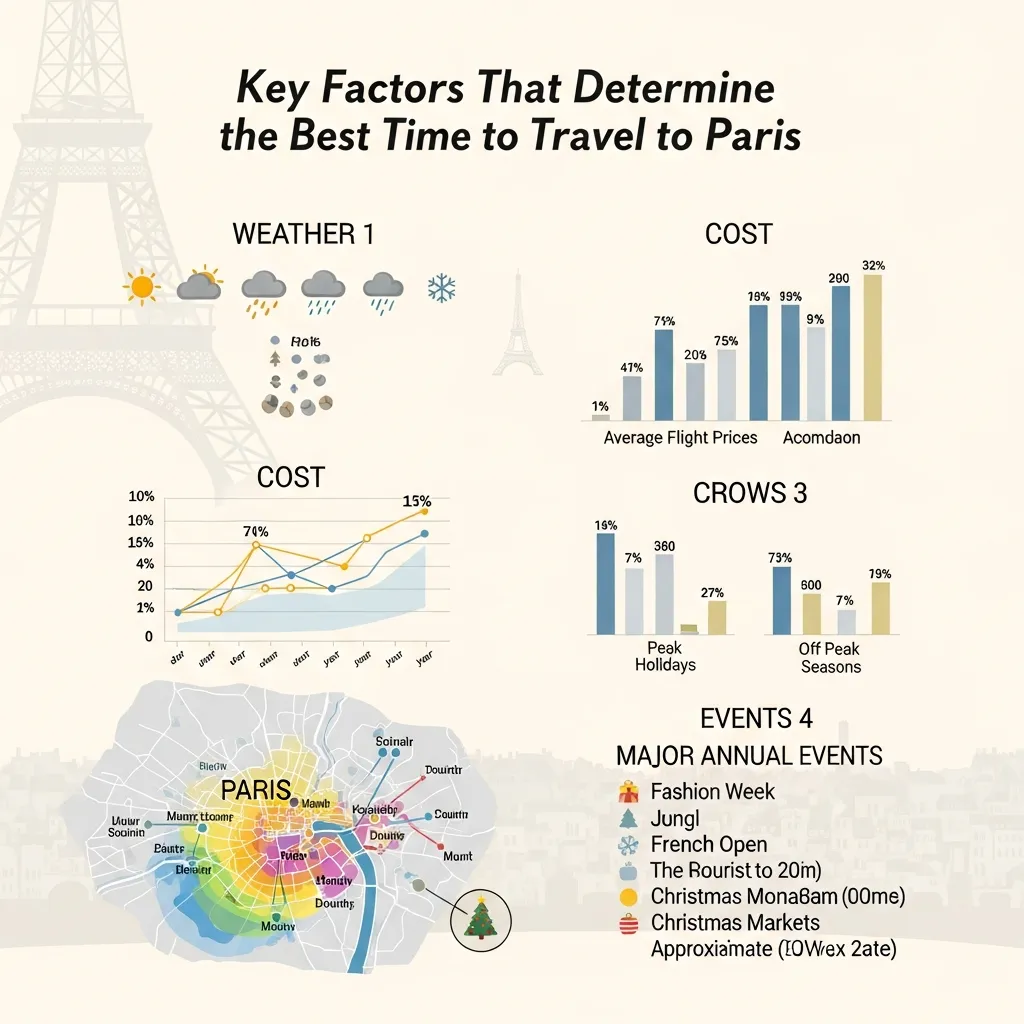
Choosing when to visit Paris isn’t just about weather. Several practical factors shape the experience.
How Does Budget Affect the Best Time to Travel to Paris?
High season (June–August) commands premium prices for flights and accommodation. Booking a hotel in central Paris in July can cost two to three times more than the same property in January. If cost is a major consideration, shoulder seasons—spring and autumn—offer the best balance between affordability and enjoyable conditions.
How Do Crowd Levels Vary Throughout the Year in Paris?
Summer crowds are relentless. The Louvre alone receives up to 30,000 visitors per day in peak season. If avoiding queues matters to you, September, October, January, and February are your best options. Regardless of season, pre-booking timed entry tickets for major attractions like the Eiffel Tower, the Louvre, and Versailles is strongly recommended.
Which Paris Events Should You Plan Your Trip Around?
If Bastille Day fireworks or the French Open are on your bucket list, you’ll need to plan accordingly—and book early. Fashion Week in September fills hotels quickly despite the post-summer slowdown. Nuit Blanche in October, on the other hand, is a quieter event that doesn’t significantly impact pricing.
Beyond Paris: Expanding Your Travel Plans
Paris often serves as a gateway to broader European and international adventures. A few related destinations worth considering:
What Is the Best Time to Travel to Morocco?
Morocco is a popular add-on for Paris travelers, particularly given the direct flights from Charles de Gaulle Airport to Marrakech and Casablanca. The best time to travel to Morocco is spring (March–May) or autumn (September–November), when temperatures in the Sahara and imperial cities are manageable. Summer heat in Morocco can be extreme, and winter nights in the Atlas Mountains drop below freezing.
When Is the Best Time to Travel to South Korea?
Those combining a Paris trip with Asian travel often consider South Korea. The best time to travel to South Korea is spring (April–May) for cherry blossoms, or autumn (September–November) for vivid foliage and comfortable weather. Summer (June–August) brings the monsoon season, while winters are cold and dry.
Why Should You Consider Travel Pillow Alternatives for Long-Haul Flights?
If you’re flying into Paris from North America, Asia, or Australia, you’ll likely spend 10+ hours in the air. Traditional travel pillows can be bulky and uncomfortable. Travel pillow alternatives—such as inflatable neck rolls, memory foam wraps, or hooded travel blankets—provide better neck support and pack down more efficiently. Researching the right option before a long-haul flight makes a noticeable difference in how rested you feel on arrival.
Practical Tips for Your Parisian Trip
How Far in Advance Should You Book Accommodation in Paris?
For peak season travel (June–August and December), book accommodation at least three to four months ahead. For shoulder seasons, six to eight weeks is usually sufficient. Staying in neighborhoods like the Marais, Saint-Germain-des-Prés, or Montmartre puts you close to major attractions without the premium price of hotels directly facing the Eiffel Tower.
How Do You Navigate Paris Using Public Transportation?
The Paris Métro is one of the most efficient urban rail networks in the world, with 16 lines covering the entire city. The RER (regional express trains) connects central Paris to Versailles, Charles de Gaulle Airport, and Orly Airport. A carnet of 10 tickets or a Navigo Easy card offers the best value for multi-day travel. Avoid taxis during rush hour—the Métro is almost always faster.
What Should You Know About Dining Etiquette in Paris?
Parisians take meals seriously. Lunch is typically served between noon and 2 PM; dinner rarely starts before 7:30 PM. Asking for the bill (l’addition, s’il vous plaît) is expected—waitstaff will not bring it automatically. Tipping is appreciated but not obligatory; rounding up or leaving a few euros is standard. Avoid asking for modifications to dishes—it’s considered impolite in traditional French restaurants.
Plan Your Paris Trip with Confidence
There’s no single “correct” answer to the best time to travel to Paris—but there is a best time for you. Spring and autumn offer the most well-rounded experience, balancing pleasant weather with manageable crowds and reasonable prices. Summer rewards those who don’t mind the bustle and want to experience Paris at its most vibrant. Winter suits the budget-conscious traveler or anyone seeking a more contemplative, intimate experience of the city.
Whatever season you choose, Paris rewards preparation. Book key attractions in advance, choose your neighborhood carefully, and give yourself enough time to wander without an agenda. The city reveals itself most generously to those who slow down.
Frequently Asked Questions About the Best Time to Travel to Paris
1. What is the Best Time to Travel to Paris for good weather?
The Best Time to Travel to Paris for pleasant weather is usually late April through June. During this period, temperatures are mild, gardens are in bloom, and sightseeing is much more comfortable than in the peak summer heat.
2. When is the Best Time to Travel to Paris for lower prices?
If your priority is saving money, the Best Time to Travel to Paris is often January and February. Flights and hotels are usually cheaper, and you can explore the city with fewer crowds.
3. Is summer the Best Time to Travel to Paris?
Summer can be a great season, but it is not always the Best Time to Travel to Paris if you dislike crowds. From June to August, Paris is very busy, and top attractions like the Eiffel Tower and Louvre are packed.
4. Is winter a good season if I want the Best Time to Travel to Paris on a budget?
Yes, winter can be the Best Time to Travel to Paris for budget travelers. December brings festive lights and Christmas charm, while January and February offer some of the lowest prices of the year.
5. What is the single Best Time to Travel to Paris for first-time visitors?
For first-time travelers, May is often considered the Best Time to Travel to Paris. The weather is comfortable, the city looks beautiful, and the crowds are lighter than in the busiest summer months.
6. How many days should I spend in Paris?
To make the most of the Best Time to Travel to Paris, plan for 4 to 5 days at minimum. This gives you enough time for major highlights like the Eiffel Tower, the Louvre, Montmartre, and a Seine cruise.
7. Does the Best Time to Travel to Paris also work for trips to Morocco?
Yes, the Best Time to Travel to Paris in spring and autumn also pairs well with a trip to Morocco. These seasons offer comfortable weather in both destinations, making it easier to plan a combined itinerary.
8. Can the Best Time to Travel to Paris also match a South Korea trip?
Yes, if you want to combine destinations, the Best Time to Travel to Paris in spring or autumn also matches the best travel seasons for South Korea, when the weather is mild and scenery is at its best.
9. What should I pack for the Best Time to Travel to Paris?
What you pack depends on the Best Time to Travel to Paris you choose. In spring and autumn, layers, a light jacket, and comfortable walking shoes are essential. In winter, add a warm coat, scarf, and waterproof shoes.
10. Are there any dates to avoid when planning the Best Time to Travel to Paris?
Yes. If you want the Best Time to Travel to Paris with fewer crowds and lower prices, try to avoid Bastille Day, Fashion Week, and the Christmas–New Year period, as these dates often bring hotel price spikes and heavy demand.
11. Is Paris safe during the Best Time to Travel to Paris?
Yes, Paris is generally safe year-round, including during the Best Time to Travel to Paris. Like any major city, the biggest issue for tourists is usually pickpocketing in crowded areas, especially near famous attractions and on the Métro.
12. Do I need to speak French when visiting during the Best Time to Travel to Paris?
No, you do not need fluent French to enjoy the Best Time to Travel to Paris. English is widely understood in tourist areas, but using simple French phrases like “Bonjour” is always appreciated and can improve your overall experience.