

Finding the best time to travel to Greece depends entirely on what you want out of your vacation. Summer offers perfect beach weather and lively island nightlife, while spring and autumn provide milder temperatures ideal for sightseeing and hiking without the heavy crowds. Winter opens up a completely different side of the country, featuring quiet ruins, affordable prices, and even mountain skiing.
Planning a trip to the Mediterranean is exciting, but pinpointing the best time to travel to Greece can feel overwhelming. With thousands of islands, rugged mainland mountains, and ancient cities scattered across the map, the country offers vastly different experiences depending on the month you arrive. The climate and local seasons dictate everything from ferry schedules to the opening hours of world-famous archaeological sites.
Every traveler has different priorities. Some dream of lounging on sun-drenched beaches in Mykonos or Santorini. Others want to hike through olive groves, explore the Acropolis without sweating through their shirts, or experience authentic local festivals in small mountain villages. Pinpointing the best time to travel to Greece requires matching your specific travel goals with the country’s distinct seasonal rhythms.
This comprehensive guide breaks down the weather, crowd levels, and prime activities for every season. We will explore the pros and cons of visiting during spring, summer, autumn, and winter. By the end of this guide, you will have all the information you need to confidently choose the best time to travel to Greece for your dream vacation.
Understanding Greece’s Climate

Greece enjoys a classic Mediterranean climate. This generally means hot, dry summers and mild, wet winters. However, the country’s diverse geography creates distinct microclimates. The southern islands stay warmer much longer than the northern mainland.
These seasonal variations directly impact travel logistics. Ferry routes between the islands operate at maximum capacity during the summer peak but scale back significantly from November to March. Many island hotels and restaurants also close entirely during the winter. Understanding these climatic shifts is the first step in determining the best time to travel to Greece for your itinerary.
Spring in Greece (April – May)
Spring breathes new life into the Greek landscape. The winter rains fade, leaving the hillsides vibrant and covered in wildflowers. For many outdoor enthusiasts, spring is undeniably the best time to travel to Greece.
Temperatures during April and May are mild, generally ranging from 60°F to 75°F (15°C to 24°C). This makes it highly comfortable for exploring ancient ruins and walking through cities like Athens or Thessaloniki. Easter is the most significant religious holiday in Greece, and visiting during this time allows you to witness incredible cultural traditions, feasting, and local celebrations.
Pros for visiting in spring:
- Comfortable temperatures for hiking and sightseeing.
- Beautiful blooming landscapes and green hillsides.
- Fewer crowds at major tourist attractions.
Cons for visiting in spring:
- The sea is usually too cold for comfortable swimming.
- Some island businesses may not open until late May.
Summer in Greece (June – August)
If your dream vacation involves hot sand, vibrant nightlife, and swimming in the Aegean Sea, summer is the best time to travel to Greece. The weather is hot and sunny, with temperatures frequently climbing above 90°F (32°C).
This is the peak tourist season. Millions of visitors flock to popular islands like Santorini, Mykonos, and Crete. The days are long, allowing for extended island-hopping adventures, sunset cruises, and late-night dinners at seaside tavernas. Ferries run constantly, making it easy to navigate between different island chains.
Pros for visiting in summer:
- Perfect weather for beaches and swimming.
- Maximum availability of ferries, flights, and island tours.
- Lively atmosphere with bustling nightlife.
Cons for visiting in summer:
- Extremely crowded at popular destinations.
- Peak prices for flights and accommodation.
- Midday heat can make sightseeing uncomfortable.
Autumn in Greece (September – October)
Many seasoned travelers argue that autumn is the absolute best time to travel to Greece. The intense heat of August begins to subside, yet the sea remains warm enough for swimming well into October.
September offers a perfect balance. You get the benefits of summer weather without the overwhelming crowds. As autumn progresses, the landscapes turn golden, and rural areas celebrate the grape and olive harvests. It is an excellent season for cultural tours, wine tasting, and interacting with locals who are more relaxed after the busy summer rush.
Pros for visiting in autumn:
- Pleasant weather and warm sea temperatures.
- Lower prices and thinner crowds than in summer.
- Unique cultural experiences like local harvest festivals.
Cons for visiting in autumn:
- Shorter daylight hours compared to the summer.
- Increased chance of rain by late October.
- Reduced ferry schedules toward the end of the season.
Winter in Greece (November – March)
Winter is the most overlooked season, but it holds a unique charm. While it is certainly not the best time to travel to Greece for a beach holiday, it is a fantastic time for a city break or a mainland road trip.
Temperatures cool down significantly, and rain is common. In the mountainous regions of the mainland, snow falls heavily enough to support several popular ski resorts. Athens becomes a local city again, allowing you to explore the Acropolis, museums, and neighborhoods in peace. Prices are at their absolute lowest during these months.
Pros for visiting in winter:
- Lowest possible prices for accommodation and flights.
- Authentic local experiences without tourist crowds.
- Opportunities for winter sports in the northern mountains.
Cons for visiting in winter:
- Most resort islands essentially shut down.
- Cold, rainy, and sometimes snowy weather.
- Highly restricted ferry and flight schedules to the islands.
Best Time to Travel to Greece for Specific Activities
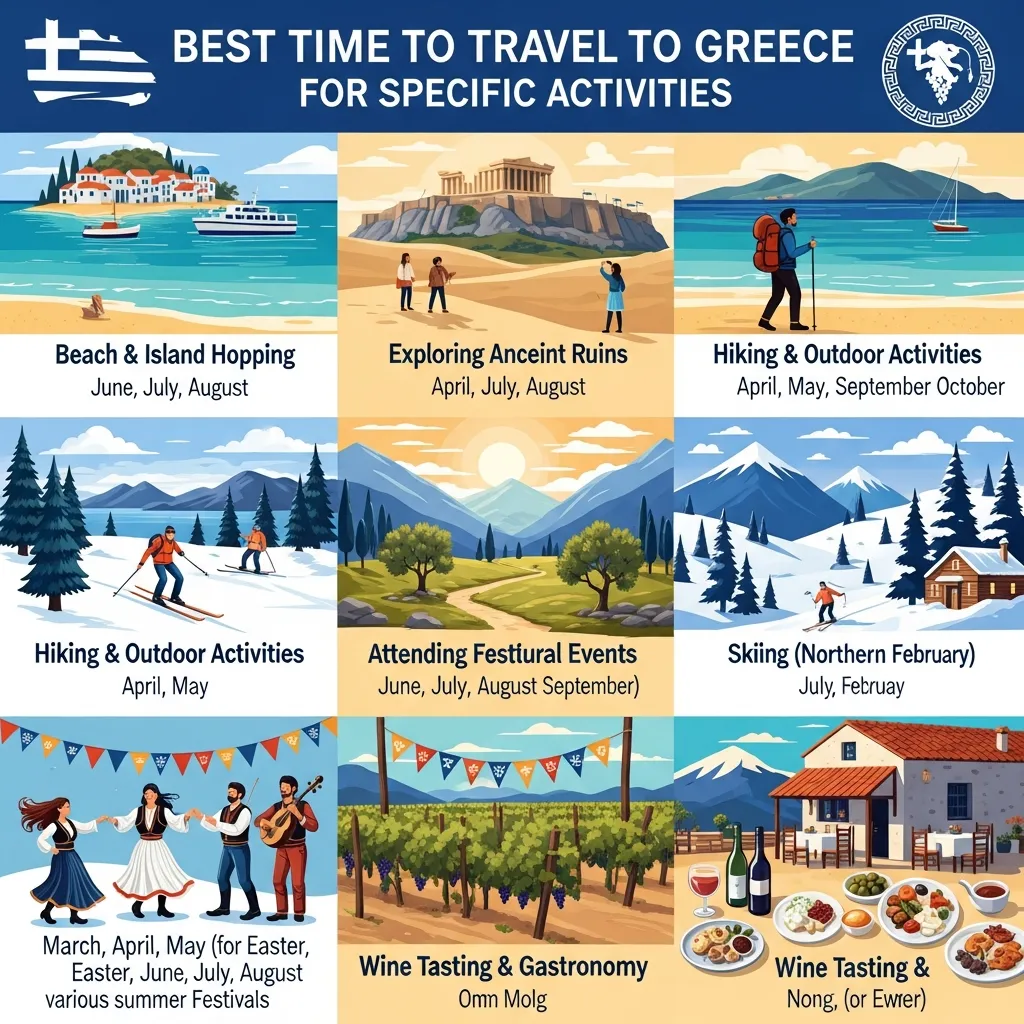
Your itinerary should dictate when you book your flights. Here is a quick breakdown of the best time to travel to Greece based on specific interests:
Beach Holidays
The prime window for a beach vacation falls between June and September. The water is perfectly warm, and the sun shines almost every day.
Sightseeing & Historical Sites
April, May, September, and October are the top months for history buffs. The milder weather allows you to climb up to the Acropolis or wander the ruins of Delphi without suffering from heat exhaustion.
Hiking & Outdoor Activities
Spring and autumn provide the best conditions for trekking the Samaria Gorge in Crete or hiking the trails of the Peloponnese. The temperatures are safe, and the nature is beautiful.
Festivals & Cultural Events
Summer is packed with arts and music festivals, particularly the Athens and Epidaurus Festival. Spring is defined by Greek Orthodox Easter, while autumn highlights local agricultural celebrations.
Avoiding the Crowds and Saving Money
If you want to stretch your budget, the shoulder seasons (May, early June, September, and early October) represent the best time to travel to Greece. You will experience a massive drop in accommodation costs while still enjoying excellent weather.
Booking in advance is crucial for finding good deals, especially if you plan to visit during the summer. Use a Safe Ticket Booking platform to secure your flights and ferries months ahead of time. You can also save money and avoid the masses by exploring lesser-known islands like Naxos, Milos, or the Sporades, rather than sticking exclusively to Santorini and Mykonos.
Regional Considerations
Greece is geographically diverse, meaning the best time to travel to Greece varies by region.
The mainland, particularly the north, experiences much colder winters and slightly milder summers than the southern islands. If you are exploring northern regions like Epirus or Macedonia, the summer heat is less oppressive, making it a great July destination. Conversely, the southern islands like Crete and Rhodes have the longest tourist season, staying warm from April all the way through November.
Packing Essentials for Each Season
Packing correctly ensures you are comfortable no matter when you visit.
- Spring: Bring layers. Pack t-shirts for the day, a light sweater or jacket for the evenings, and comfortable walking shoes.
- Summer: Light, breathable clothing is essential. Pack plenty of swimwear, a wide-brimmed hat, high-SPF sunscreen, and sandals.
- Autumn: Similar to spring, layering is key. Bring a mix of summer wear for the days and a warm jacket for the cooling nights. Pack an umbrella if traveling in late October.
- Winter: Bring a heavy winter coat, waterproof boots, scarves, and gloves, especially if you plan to visit the mainland or the mountains.
Ready for Your Greek Adventure?
Finding the best time to travel to Greece is all about aligning the country’s seasons with your personal travel style. Summer delivers the ultimate island party and beach experience. Spring and autumn offer a magical combination of great weather, reasonable prices, and comfortable sightseeing. Winter provides a quiet, authentic look into local Greek culture.
No matter when you choose to go, Greece promises incredible food, rich history, and stunning landscapes. Decide what matters most to you, secure your bookings early, and get ready for an unforgettable journey to the Mediterranean.
Frequently Asked Questions (FAQs)
1. When is the absolute best time to travel to Greece for good weather?
For predictably warm and sunny weather without extreme heat, late May to early June, and September are widely considered the best months.
2. What is the cheapest time to visit Greece?
The winter months (November to March) are the cheapest time to visit. However, if you want decent weather alongside lower prices, aim for April or late October.
3. Is it worth visiting Greece in the winter?
Yes, if you enjoy city breaks, history, and authentic local culture. Athens is wonderful in winter, and the mainland offers beautiful mountain scenery and skiing.
4. How hot does Greece get in the summer?
July and August are very hot. Temperatures regularly exceed 90°F (32°C) and can sometimes push past 100°F (38°C) during heatwaves.
5. When are the fewest tourists in Greece?
Tourist numbers are at their lowest from late November through February.
6. Is October a good time to visit Greek islands?
Yes, particularly the southern islands like Crete and Rhodes, which stay warm enough for swimming and sunbathing through most of the month.
7. What is the Best Time to Travel to Aruba compared to Greece?
While the best time to travel to Greece is typically the summer or shoulder seasons, the Best Time to Travel to Aruba is usually from January to May, when the weather in the Caribbean is warm and dry, contrasting with Greece’s cold winter.
8. Are there any specific festivals to consider when planning my trip?
Greek Orthodox Easter (usually in April or May) is a fantastic cultural experience. The Athens and Epidaurus Festival runs throughout the summer, featuring theater and music.
9. What are the advantages of traveling during the shoulder season?
Shoulder seasons (spring and autumn) offer lower prices, fewer crowds, easier access to historical sites, and weather that is comfortable for both exploring and relaxing.
10. How far in advance should I book my flights and accommodation for Greece?
For summer travel, book at least six months in advance. For shoulder season, three to four months is usually sufficient. Always use a Safe Ticket Booking system to protect your purchases.
11. What kind of weather can I expect in Greece in May?
May offers lovely spring weather. Expect sunny days with temperatures generally in the 70s Fahrenheit (20s Celsius). It is warm enough for t-shirts during the day, though the sea might still feel a bit chilly.
12. What about the Best Time to Travel (Seasonal Guide) for other Mediterranean destinations?
Many Mediterranean countries share similar climates. If you are looking at a general Best Time to Travel (Seasonal Guide) for places like Italy or Spain, you will find that spring and autumn are also highly recommended for balancing good weather and manageable crowds.